specmet usa — TITANIUM Division
Titanium &Titanium Alloys
From commercially pure Grade 2 and corrosion-resistant palladium grades to aerospace-grade Grade 5 and high-strength beta alloys — we connect surplus titanium inventory with qualified buyers across aerospace, medical, chemical processing, and defense. Commission-only. No risk. No upfront cost.
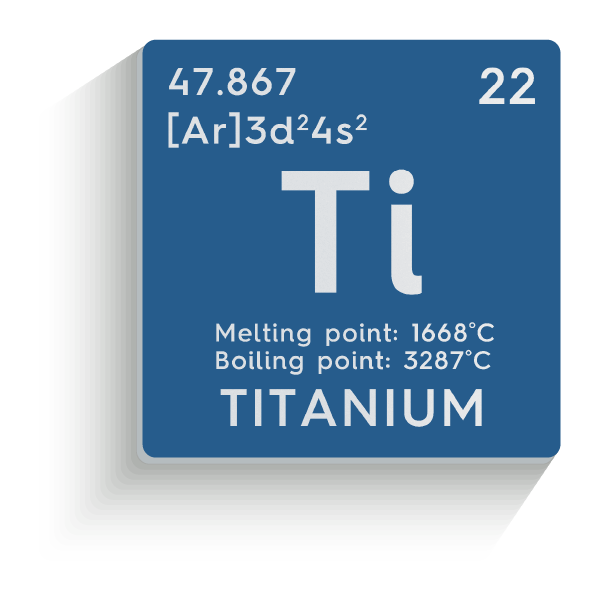
Largest Specialty Metal Market
Grade 5 alone accounts for over 50% of all titanium applications worldwide. The Boeing 787 is 15% titanium by weight. Surplus titanium from aerospace programs is among the most consistently active secondary markets we work in.
All Grades — All Forms
Commercially pure grades 1–4, corrosion-resistant palladium grades 7, 11 & 17, Grade 5, Grade 9, Grade 23 ELI, beta alloys, titanium sponge, and AM powder — we broker the full titanium product spectrum in any quantity.
Commission on Delivery
We earn our commission only after your material ships and the buyer confirms receipt. SpecMet USA never takes ownership of your inventory. No upfront fees, no retainers, no obligation.
Titanium Product Families
How Titanium Is Classified —And Why It Matters for Surplus Value
Titanium alloys are categorized by microstructure — commercially pure (alpha), alpha-beta, and beta — and each class carries different strength characteristics, end markets, and buyer profiles. Knowing your grade before approaching buyers determines how quickly your material moves and at what price. There are more than 45 ASTM-recognized titanium grades; we highlight the most commercially active below, including the corrosion-resistant palladium grades that are easy to mistake for standard CP material on a quick read of a mill cert.
CLASS | GRADES / DESIGNATIONS | STRENGTH RANGE | PRIMARY MARKET |
|---|---|---|---|
Commercially Pure (CP) | Grade 1 Grade 2 Grade 3 Grade 4 Grade 7 Grade 11 Grade 17 | 35–80 ksi UTS | Chemical processing, marine, medical implants, heat exchangers |
Alpha-Beta Alloys | Grade 5 Grade 9 Grade 23 ELI Ti-6Al-2Sn-4Zr-2Mo | 100–190 ksi UTS | Aerospace structures, jet engines, medical implants, automotive |
Beta & Near-Beta Alloys | Ti-10V-2Fe-3Al Beta-C (3-8-6-4-4) Ti-15V-3Cr-3Sn-3Al | 160–200+ ksi UTS | Aerospace fasteners, landing gear, high-strength structural, springs |
Medical / ELI Grades | Grade 23 (Ti-6Al-4V ELI) Grade 1/2 (implant) ASTM F136 F67 | Varies by grade | Orthopedic implants, dental, spinal hardware, cardiovascular devices |
Titanium Sponge & Powder | Kroll Sponge Ti-6Al-4V Powder CP Ti Powder | N/A (raw material) | Alloy melting, additive manufacturing, powder metallurgy, thermal spray |
CP TITANIUM GRADES 1-4
ASTM B265 · B348 · F67 · AMS 4900–4902
Four grades of unalloyed titanium with increasing strength and decreasing ductility as grade number rises. Grade 2 is the most widely stocked and most liquid on the secondary market. Grade 4 is the strongest CP grade.
CORROSION-RESISTANT Pd GRADES
Grade 7 · Grade 11 · Grade 17 · ASTM B265
Commercially pure titanium with small palladium additions (0.04–0.25% Pd) for substantially improved resistance to crevice corrosion and reducing acid attack. Easy to overlook in surplus screening unless chemistry is checked against the mill cert.
TITANIUM GRADE 5
UNS R56400 · AMS 4911/4928 · ASTM B348
The titanium industry "workhorse" — accounting for more than 50% of all titanium usage globally. Found in jet engines, airframes, medical implants, and additive manufacturing. The most liquid titanium surplus in existence.
TITANIUM GRADE 9
UNS R56320 · AMS 4943/4944 · MIL-T-9046
The "half-6-4" — lower strength than Grade 5 but excellent cold formability and weldability. The standard alloy for aircraft hydraulic tubing, bicycle frames, and sporting goods. Surplus tubing is common.
TITANIUM GRADE 23
UNS R56401 · AMS 4930 · ASTM F136
Extra Low Interstitial variant of Grade 5 with tighter oxygen and iron limits, providing superior fracture toughness and fatigue performance for fracture-critical aerospace and medical implant applications.
HIGH-STRENGTH BETA ALLOYS
Ti-10-2-3 · Beta-C · Ti-15-3 · Ti-17
Metastable beta alloys heat-treatable to exceptional strengths above 160 ksi. Used for aerospace landing gear, structural forgings, and high-strength fasteners. Less common in surplus but commands strong pricing when available.
TITANIUM SPONGE & POWDER
Kroll Process Sponge · Ti64 Powder · CP Powder
Titanium sponge is the primary raw material for all titanium alloy production. Ti-6Al-4V and CP titanium powders are in growing demand for LPBF additive manufacturing. Both are actively traded in secondary markets.
Specification Reference
ASTM Product-Form Standards
Surplus titanium documentation often references a product-form standard rather than a grade number alone. Knowing which ASTM specification governs your material's form — sheet, bar, tube, forging, or sponge — helps confirm it meets a recognized industrial specification, which materially affects buyer confidence and price.
ASTM STANDARD | PRODUCT FORM | NOTES |
|---|---|---|
B265 | Strip, Sheet & Plate | The core grade catalog reference — defines chemistry and mechanical requirements for most standard CP and alloy grades |
B348 | Bars & Billets | Standard reference for wrought bar and billet across CP and alloy grades |
B364 | Ingots | Covers ingot — typically the starting stock prior to forging or rolling |
B365 | Rod & Wire | Covers rod and wire forms in standard grades |
B863 | Wire | Wire specification, including fine wire for welding and fastener applications |
B338 | Seamless & Welded Tubes | Condensers and heat exchangers — the standard reference for Grade 2, 7, 11, and 17 corrosion-resistant tubing |
B861 | Seamless Pipe | Current standard for titanium process piping |
B363 | Seamless & Welded Fittings | Uses WPT (wrought pipe titanium) designations |
B299 | Titanium Sponge | Specification for unalloyed titanium sponge — the feedstock for primary ingot production |
Surplus Materials We Handle
Specific Products &What Buyers Pay For
AMS certifications, heat number traceability, and mill test reports are the most important factors determining value for surplus titanium. The better the documentation, the faster and stronger the sale. We help sellers understand what paperwork matters before we take material to market.
Documentation drives titanium value. Unlike many commodity metals where weight and chemistry alone determine price, titanium surplus pricing is heavily influenced by whether AMS specifications, heat traceability, and mill certifications are intact. Aerospace-certified Ti-6Al-4V bar with full AMS 4928 documentation can be worth significantly more than identical chemistry bar without it. We help sellers inventory their available documentation before approaching buyers.
TENSILE STRENGTH
50 ksi (345 MPa) min
YIELD STRENGTH
40 ksi (275 MPa) min
DENSITY
4.51 g/cm³ (40% lighter than steel)
KEY STANDARDS
ASTM B265, B338, B348, B861, F67
Primary Markets
Chemical Process Equipment
Desalination Plant Components
Heat Exchanger Tubing
Marine Hardware
Architectural Cladding
Medical Implants
Electrochemical Equipment
CP Titanium Grades
Grade 2 plate and pipe from chemical plant shutdowns, desalination project overruns, and canceled heat exchanger orders moves quickly when properly identified. Its broad applicability means buyer competition is often strong.
TENSILE STRENGTH
50 ksi (345 MPa) min
PALLADIUM CONTENT
0.12–0.25% Pd
BASE CHEMISTRY
Matches Grade 2 (CP Ti)
KEY STANDARDS
ASTM B265, B338, UNS R52400
Primary Markets
Chemical Process Equipment
Heat Exchanger Tubing
HCl / H₂SO₄ Service Equipment
Urea Synthesis Equipment
Bayonet Heaters & Spargers
Overlooked but Valuable
Sellers who don't check chemistry against the UNS designation (R52400) often list Grade 7 as plain Grade 2, underpricing it significantly. Always confirm Pd content before quoting — buyers in reducing-acid service actively seek this grade and will pay a real premium over standard CP material.
TENSILE STRENGTH
35 ksi (240 MPa) min
PALLADIUM
0.12–0.25% Pd
BASE CHEMISTRY
Matches Grade 1 (CP Ti)
KEY STANDARDS
ASTM B265, B338, UNS R52250
Primary Markets
Complex Formed Chemical Components
Desalination Plant Components
Expansion Bellows & Formed Tube
Marine Hardware
Cathodic Protection Systems
Formability Meets Corrosion Resistance
Surplus Grade 11 sheet and formed components from desalination and chemical fabrication shops are uncommon but sought after by buyers needing both deep-draw formability and crevice corrosion resistance in a single material. Chemistry documentation confirming the Pd addition is essential for proper valuation.
TENSILE STRENGTH
35 ksi (240 MPa) min
PALLADIUM CONTENT
0.04–0.08% Pd
BASE CHEMISTRY
Matches Grade 1 (CP Ti)
KEY STANDARDS
ASTM B265, B338, UNS R52252
Primary Markets
Marine & Offshore Sheet
Cathodic Protection Systems
Architectural Cladding
Lower-Severity Chemical Equipment
The Economical Pd Grade
Surplus Grade 17 sheet and plate from marine and offshore fabrication is the most common source we see. It's a useful alternative to quote alongside Grade 7/11 when a buyer's corrosion requirement doesn't justify the higher Pd content — and worth flagging to sellers who may not realize their "Grade 1" material is actually a Pd-bearing variant.
TENSILE STRENGTH
130 ksi (895 MPa) min
YIELD STRENGTH
120 ksi (828 MPa) min
MAX SERVICE TEMP
~350°C (660°F) continuous
KEY STANDARDS
AMS 4911 (sheet), AMS 4928 (bar), ASTM B348
Primary Markets
Jet Engine Fan Blades
Compressor Discs & Blades
Airframe Structures
Aerospace Fasteners
Medical Orthopedic Implants
Offshore Oil & Gas
Racing Automotive
Additive Manufacturing
The Most Common Titanium Grade
Ti-6Al-4V bar ends, plate remnants, and overordered billet from aerospace contracts represent the most consistently traded surplus titanium we broker. AMS 4928 bar certification is the most valuable form of documentation. Even without aerospace certification, Grade 5 scrap and revert commands strong pricing from melt shops and AM powder producers.
TENSILE STRENGTH
~90 ksi (620 MPa) typical
ALUMINUM / VANADIUM
3% Al / 2.5% V
KEY APPLICATION
Aircraft hydraulic tubing
KEY STANDARDS
AMS 4943/4944, ASTM B265/B337/B338
Primary Markets
Aircraft Hydraulic Tubing
Aerospace Structural Tube
Bicycle Frames & Components
Golf Club Shafts
Sporting Equipment
Cryogenic Piping
Tubing Surplus Is Common
Aerospace MRO shops and hydraulic system manufacturers regularly carry surplus Grade 9 tube from OEM orders and canceled programs. Boeing and Airbus OEM-specified tubing with original traceability to aerospace primes is particularly sought after. Consumer sports market buyers also provide a reliable secondary demand channel for standard-grade material.
MAX OXYGEN
0.13% (vs 0.20% in Grade 5)
TENSILE STRENGTH
120 ksi (828 MPa) min
KEY MEDICAL STD
ASTM F136, ISO 5832-3
KEY AEROSPACE STD
AMS 4930, AMS 4907
Primary Markets
Hip & Knee Replacements
Spinal Fusion Devices
Bone Plates & Screws
Fracture-Critical Airframe
Offshore Risers & Tubulars
Cardiovascular Devices
Premium Pricing for Grade 23 ELI with Documentation
Surplus Grade 23 with intact ASTM F136 or AMS 4930 certification is among the highest per-pound titanium surplus we broker. Medical device manufacturers and aerospace Tier 1 suppliers actively seek ELI-certified material in bar, wire, and plate form. Even without original certifications, the ELI chemistry commands a premium over standard Grade 5 if chemical analysis documentation is available.
Ti-10-2-3 UTS
170–185 ksi (1,170–1,275 MPa)
Ti-15-3 UTS
160–185 ksi (1,100–1,275 MPa)
kEY APPLICATIONS
Landing gear, structural forgings, fasteners
KEY STANDARDS
AMS 4983/4984/4986 (10-2-3), AMS 4914
Primary Markets
Aerospace Landing Gear
Large Structural Forgings
High-Strength Fasteners
Aerospace Springs
Fighter Jet Airframe
Rotorcraft Components
Rare But Premium
Beta alloy surplus is less frequent than Grade 5 but can command a significant premium over equivalent Grade 5 material due to limited producer availability and the narrow, specialized buyer base. Program cancellations and qualification test remnants are the most common sources. Full AMS certification and heat traceability are essential for maximum value.
PURITY
99.0–99.7% Ti (typical)
PRODUCTION METHOD
Kroll Process (TiCl₄ + Mg reduction)
FORM
Irregular sponge pieces, compacted briquettes
KEY BUYERS
Ingot producers, powder atomizers, master alloy
Primary Markets
Titanium Ingot Production (VAR)
Alloy Master Additions
Powder Atomization Feedstock
Chemical & Specialty Applications
Strategic Raw Material
Surplus titanium sponge — particularly from U.S. or Japanese origin with documented impurity analysis — finds immediate buyer interest from domestic melt shops seeking supply chain security. Chemical analysis for key impurities (Fe, O, N, C, H, Cl) is the critical documentation for buyer evaluation.
LPBF PARTICLE SIZE
15–45 µm (typical)
EBM PARTICLE SIZE
45–106 µm (typical)
MORPHOLOGY
Spherical (plasma or gas atomized)
KEY QUALITY FACTORS
O content, PSD, flowability, contamination
Primary Markets
Aerospace LPBF Structural Parts
Medical Implant AM
EBM Turbine Components
Defense AM Components
Dental Prostheses
Growing Demand — Careful Evaluation Needed
Surplus Ti-6Al-4V AM powder must be carefully evaluated for oxygen pickup, particle size drift, and contamination before buyers will accept it for structural applications. Sealed, never-opened canisters with original certificates of conformance command full market pricing. Recycled or partially used powder requires re-testing but still retains significant value as feedstock for less critical applications.
The Process
How Our Brokerage Works
Simple, transparent, and commission-only. You don't pay us anything until a qualified buyer receives your material.
01
Submit Your Inventory
Tell us what you have — material type, grade, quantity, form, and any available analysis or mill certs. The more detail you provide, the faster we can identify buyers.
02
We Identify Buyers
We work our network of qualified industrial buyers — superalloy producers, steel mills, aluminum foundries, plating operations, and fabricators — to find the right match for your material.
03
Terms Are Agreed
Once a buyer is identified, terms are negotiated between you and the buyer. We facilitate but do not take title to the material — this is a direct seller-to-buyer transaction.
04
We Earn on Delivery
Our commission is collected only after the product ships and is confirmed received. No upfront fees, no retainers. Our success depends entirely on yours.
Inventory We Handle
Forms & Conditions Accepted
We work with titanium and titanium alloy materials across all product forms. Aerospace-certified prime material commands the strongest pricing, but we routinely find buyers for secondary and uncertified material as well — often for revert, AM feedstock, or non-critical industrial applications.
BAR & BILLET
All diameters, AMS-certified aerospace grade and commercial quality (ASTM B348, B364)
PLATE & SHEET
All thicknesses in CP grades and alloy grades, prime and remnant (ASTM B265)
PIPE & TUBE
Seamless and welded — CP Grade 2/7/11/17, Grade 9 hydraulic, Grade 5 structural (ASTM B338, B861, B363)
FORGINGS & BILLET
As-forged, rough-machined, and finished forgings from canceled aerospace programs (ASTM B381, F-2/F-5 grades)
WIRE & FASTENERS
Titanium fastener stock, weld wire, and drawn wire in all grades (ASTM B365, B863)
AM POWDER
Ti-6Al-4V and CP titanium powder — sealed canisters or recycled stock
TITANIUM SPONGE
Kroll process sponge from any origin, with or without impurity analysis (ASTM B299)
REVERT & SCRAP
Titanium scrap, turnings, and revert from machining operations — all grades
MEDICAL GRADE MATERIAL
ASTM F136 / F67 certified material from medical device programs
Ready to Move Your Inventory?
Tell Us What You Have
Submit your inventory details and a member of the SpecMet Brokerage team will respond within one business day. We work with procurement managers, inventory controllers, plant managers, and CFOs across aerospace, medical device, chemical processing, and defense manufacturing.
No obligation. No upfront cost. No commitment required to submit an inquiry. If we can identify a qualified buyer for your titanium material, we will — and we earn our commission only when the deal closes.
All inquiries are handled with strict confidentiality.
By submitting this form you agree to be contacted by the SpecMet USA team. We do not share your information with any third party without your explicit consent.