SpecMet USA — NIOBIUM Division
NIOBIUM &NIOBIUM Alloys
The invisible backbone of modern high-strength steel. The primary strengthening element in the world's most-used superalloy. The wire inside every MRI scanner. Niobium — still called columbium in American steel mills — is one of the most consequential specialty metals in industrial civilization, and surplus inventory across all product forms has active, qualified buyers. Commission-only. No risk to the seller.
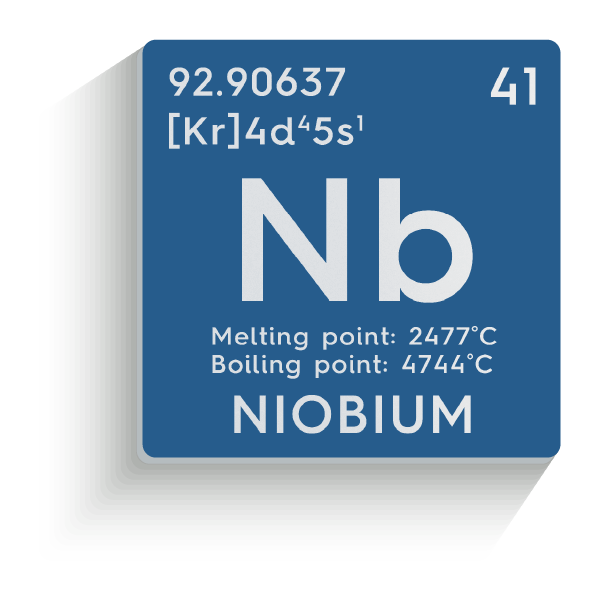
90% Is Ferroniobium
Over 90% of all niobium produced globally is consumed as ferroniobium for high-strength steel microalloying, one of the most concentrated end-use profiles of any specialty metal. Small niobium additions can significantly increase steel strength while supporting lighter, more efficient structural designs.
Critical to High-Strength Steel
Niobium plays an important role in high-strength, low-alloy steels used across transportation, energy infrastructure, construction, and other demanding applications. Even small additions can improve strength, toughness, and weldability, making niobium an important material across a broad range of industrial supply chains.
Commission on Delivery
We earn our commission only after your material ships and the buyer confirms receipt. SpecMet Brokerage never takes title to your inventory. No retainers, no upfront fees, no obligation if we cannot find you a qualified buyer.
Nb / Cb
Niobium or Columbium? Both names refer to the same element. The IUPAC officially adopted "niobium" in 1949, but columbium (symbol Cb) remains in active use in North American steel metallurgy — you will encounter both names in mill certifications, ASTM standards, and purchase orders. ASTM uses "columbium" in many steel specifications. When a steel mill asks for "columbium," they mean niobium. SpecMet Brokerage handles both designations and helps buyers and sellers align on terminology during transactions.
Critical Properties & Market Scale
Small Additions.Enormous Industrial Impact.
Niobium's extraordinary leverage in steel — where 0.03–0.10% addition achieves strength improvements that would otherwise require 5–10× the addition of conventional alloying elements — makes it one of the most cost-efficient specialty metal investments in steelmaking. Its secondary markets in superalloys and superconductors, while smaller by volume, command significantly higher per-kilogram prices.
Strategic Industrial Importance: Niobium supports a range of demanding applications across steelmaking, aerospace, energy, medical technology, and advanced research. Its ability to improve material performance at relatively low addition levels, combined with specialized applications in superalloys and superconductors, makes traceable niobium inventory relevant to a diverse industrial buyer base.
FERRONIOBIUM (FeNb)
FeNb60 · FeNb65 · FeNb70 · ASTM A550 · Broken Lump
The dominant commercial form — 60–70% Nb balance iron. Added in 0.02–0.10% quantities to steel melts to refine grain structure, increase yield strength, improve toughness, and enhance weldability. The fundamental strengthening addition in HSLA steels used in construction, pipelines, automotive, and shipbuilding.
Nb FOR SUPPERALLOYS
Inconel 718 · Inconel 625 · C-103 · Nb Ingot
Niobium is the primary strengthening element in Inconel 718 (5% Nb) — the world's most widely used superalloy. In Inconel 625, niobium provides solid solution strengthening. In C-103 (89% Nb), it is the base metal itself. Superalloy-grade niobium must meet stringent purity requirements distinct from steel-grade ferroniobium.
Niobium is the primary strengthening element in Inconel 718 (5% Nb) — the world's most widely used superalloy. In Inconel 625, niobium provides solid solution strengthening. In C-103 (89% Nb), it is the base metal itself. Superalloy-grade niobium must meet stringent purity requirements distinct from steel-grade ferroniobium.
SUPERCONDUCTING NIOBIUM
NbTi Wire · Nb₃Sn Wire · Pure Nb (SRF Cavities)
Niobium has the highest superconducting transition temperature of any elemental metal (9.2 K). NbTi wire enables higher-field applications in particle accelerators (the LHC uses 540 tonnes). Nb₃Sn wire offers even higher critical field performance, powering next-generation magnets like CERN's HL-LHC upgrade. Pure Nb is used for superconducting RF cavities in linear accelerators.
NIOBIUM-BASED ALLOYS
C-103 (Nb-10Hf-1Ti) · Nb-1Zr · FS-85 · Cb752
High-purity niobium alloys for aerospace and nuclear applications where refractory metal properties — high melting point, low density among refractories, and corrosion resistance — are required. C-103 was the material of the Apollo Lunar Module descent engine nozzle. These alloys command exceptional per-pound pricing.
High-purity niobium alloys for aerospace and nuclear applications where refractory metal properties — high melting point, low density among refractories, and corrosion resistance — are required. C-103 was the material of the Apollo Lunar Module descent engine nozzle. These alloys command exceptional per-pound pricing.
PURE NIOBIUM (Nb)
Nb 99.9%+ · Rod · Sheet · Wire · Capacitor Grade
Commercially pure niobium metal in wrought forms. Used for chemical process equipment lining (near-tantalum-level corrosion resistance at lower cost), capacitor production (niobium oxide capacitors), jewelry and body piercing (hypoallergenic), and as a substrate for superconducting applications.
NIOBIUM OXIDE (Nb₂O₅)
Technical Grade · Optical Grade · Capacitor Grade
Niobium pentoxide is the primary intermediate in niobium processing and an important product in its own right for optical coatings (high refractive index thin films), capacitor dielectrics, lithium niobate (LiNbO₃) for electro-optic modulators, and as a catalyst support material.
Surplus Materials We Handle
Specific Products &What Buyers Pay For
Niobium surplus spans an unusually wide value range — from commodity-scale ferroniobium lots traded by the metric ton to ultra-high-value superconducting wire and aerospace structural alloys measured in kilograms. Each category has a distinct buyer pool, documentation requirement, and pricing structure.
Niobium Content
60–70% Nb (FeNb65 standard)
Physical Form
Broken lump, max piece ~8 kg typical
Key Impurity Limits
C ≤ 0.10%, S ≤ 0.05%, P ≤ 0.10%
Key Standard
ASTM A550 (Ferro-Columbium)
End-Use Steel Grades
HSLA Structural Steel (ASTM A572)
API Pipeline Steel (X65, X70, X80, X100)
Automotive AHSS
Shipbuilding & Offshore Plate
Construction Rebar & Sections
Pressure Vessel Steel
Railway Rail & Wheel Steel
Largest Volume Nb Surplus
Ferroniobium surplus from steel mill inventory reductions and commodity trading position liquidations is the most common and most liquid niobium secondary market product by weight. Chemical analysis per ASTM A550 — particularly Nb%, C%, Si%, S%, P%, and Al% — is the standard buyer documentation requirement. Non-Brazilian origin with clear lot traceability commands premiums in defense-adjacent procurement.
Purity
99.7%+ Nb (superalloy grade)
Key Alloys Using Nb
Inconel 718 (5% Nb), Inconel 625 (3.5% Nb)
Form
Ingot, EB-melted rounds, or broken pieces
Critical Impurities
Fe, Si, O, Ta — tightly controlled
End-Use Superalloys
Inconel 718 (Jet Engines, Gas Turbines)
Inconel 625 (Chemical, Offshore, Aerospace)
Waspaloy & Related Alloys
Ni-Base Superalloy VIM Melting
Aerospace Engine Components
Premium-Priced Niche Market
Superalloy-grade niobium ingot commands prices significantly above ferroniobium on a per-contained-niobium basis due to its purity requirements and limited production base. Surplus from aerospace superalloy producers, VIM melt shop inventory reductions, and government strategic stockpile releases finds buyers among the small number of specialty alloy melt shops globally. Full chemical analysis and melt lot documentation are mandatory for this buyer pool.
Composition
~52% Nb / 46–48% Ti
Critical Temperature
~9 K (superconducting below this)
Operating Temperature
4.2 K (liquid helium)
Common Form
Multifilament wire in Cu matrix, spooled
End-Use Applications
MRI Magnet Systems (Clinical)
Particle Accelerator Magnets (LHC, ITER)
NMR Spectrometer Magnets
Research Superconducting Magnets
MAGLEV Transportation Magnets
Specialized Buyer Base
NbTi wire surplus from decommissioned MRI systems, research facility upgrades, and manufacturing programs finds buyers among superconducting magnet builders, research institutions, and specialty wire recyclers who recover the niobium and titanium content. The copper matrix surrounding NbTi filaments also carries significant value. Wire documentation (filament count, diameter, Cu ratio, residual resistivity ratio) determines the buyer pool and pricing.
Niobium Content
89% Nb
Hafnium / Titanium
10% Hf / 1% Ti
Key Applications
Rocket nozzles, hypersonic structures
Heritage
Apollo Lunar Module descent engine nozzle
End-Use Applications
Liquid Rocket Thruster Nozzles
Hypersonic Vehicle Structures
Attitude Control Thrusters
Aerospace Engine Hot Sections
Defense Missile Systems
Rare and Premium
C-103 surplus in any form is exceptionally rare and commands among the highest per-pound pricing of any niobium product. Aerospace defense contractors, government space programs, and commercial launch vehicle manufacturers represent the buyer pool. Full material certification and chain-of-custody documentation are essential. We work with sellers to preserve all available documentation and approach only buyers equipped to properly evaluate and use this material.
Purity
99.9%+ Nb (commercial to 99.99%+ SRF)
Key Properties
Corrosion resistant, hypoallergenic, superconducting
Forms
Rod, sheet, wire, pellets, tube, granule
Key Standards
ASTM B392 (rod/wire), ASTM B393 (sheet)
End-Use Applications
Chemical Process Equipment Lining
Niobium Oxide Capacitors
SRF Cavity Construction (Accelerators)
Corrosion-Resistant Heat Exchangers
Hypoallergenic Jewelry & Medical
Cathodic Protection Systems
Multi-Industry Buyer Base
Pure niobium surplus from chemical plant equipment changes, electronics manufacturing overruns, and closed processing operations finds buyers across chemical engineering, electronics, and research sectors simultaneously. Purity level (commercial vs. SRF-grade) determines the buyer pool. ASTM B392/B393 certified material in good physical condition moves most efficiently.
Niobium Content
~69% Nb by weight
Purity Range
99% (technical) to 99.99% (optical/electronics)
Physical Form
White powder, drums or sealed containers
Key Markets
FeMb production, optical coatings, capacitors, LiNbO₃
End-Use Applications
Ferroniobium Production Feedstock
Lithium Niobate (LiNbO₃) Crystal
Optical Thin Film Coatings
Nb₂O₅ Sputtering Targets
Niobium Capacitor Dielectrics
Catalyst Support Applications
Purity Determines the Buyer
Nb₂O₅ surplus value and buyer type depend entirely on purity and impurity profile. Technical grade (99%) is placed with FeMb producers; optical grade (99.9%+) with thin film coating specialists; electronics grade (99.99%+) with capacitor and electro-optic crystal manufacturers. Full impurity analysis is the essential documentation for any Nb₂O₅ surplus inquiry.
The Process
How Our Brokerage Works
Simple, transparent, and commission-only. You don't pay us anything until a qualified buyer receives your material.
01
Submit Your Inventory
Tell us what you have — material type, grade, quantity, form, and any available analysis or mill certs. The more detail you provide, the faster we can identify buyers.
02
We Identify Buyers
We work our network of qualified industrial buyers — superalloy producers, steel mills, aluminum foundries, plating operations, and fabricators — to find the right match for your material.
03
Terms Are Agreed
Once a buyer is identified, terms are negotiated between you and the buyer. We facilitate but do not take title to the material — this is a direct seller-to-buyer transaction.
04
We Earn on Delivery
Our commission is collected only after the product ships and is confirmed received. No upfront fees, no retainers. Our success depends entirely on yours.
Inventory We Handle
Forms & Conditions Accepted
We work with niobium and columbium materials across all product forms and a wide range of conditions. Whether you have metric ton lots of ferroniobium or a few kilograms of C-103 rocket alloy, we identify the right buyer for your specific material.
FERRONIOBIUM
FeNb60–70, broken lump or powder, all quantities — ASTM A550 or equivalent
SUPERALLOY-GRADE Nb INGOT
High-purity Nb for VIM additions to Inconel 718, 625, and related alloys
NbTi SUPERCONDUCTING WIRE
Multifilament NbTi in copper matrix — spooled or cut, from MRI and accelerator programs
C-103 & Nb STRUCTURAL ALLOYS
C-103, Nb-1Zr, FS-85, Cb752 — sheet, tube, machined parts, revert
PURE NIOBIUM ROD & SHEET
ASTM B392/B393, all forms — chemical, electronics, and research grades
PURE Nb WIRE & PELLETS
Capacitor-grade, SRF-grade, and commercial purity niobium wire and granule
NIOBIUM PENTOXIDE (Nb₂O₅)
Technical through ultra-high-purity optical grade — powder in sealed containers
NIOBIUM SPUTTERING TARGETS
Pure Nb and Nb₂O₅ targets — used and new, planar and rotary configurations
Nb SCRAP & REVERT
Machining scrap, alloy revert, and mixed Nb-bearing materials — content determines value
Ready to Move Your Inventory?
Tell Us What You Have
Submit your inventory details and a member of the SpecMet USA team will respond within one business day. We work with procurement managers, inventory controllers, plant managers, and CFOs across steel production, aerospace, medical device, particle physics, chemical processing, and electronics manufacturing.
No obligation. No upfront cost. No commitment required to submit an inquiry. If we can identify a qualified buyer for your niobium or columbium material, we will — and we earn our commission only when the deal closes.
All inquiries are handled confidentially.
By submitting this form you agree to be contacted by the SpecMet USA team. We do not share your information with any third party without your explicit consent.